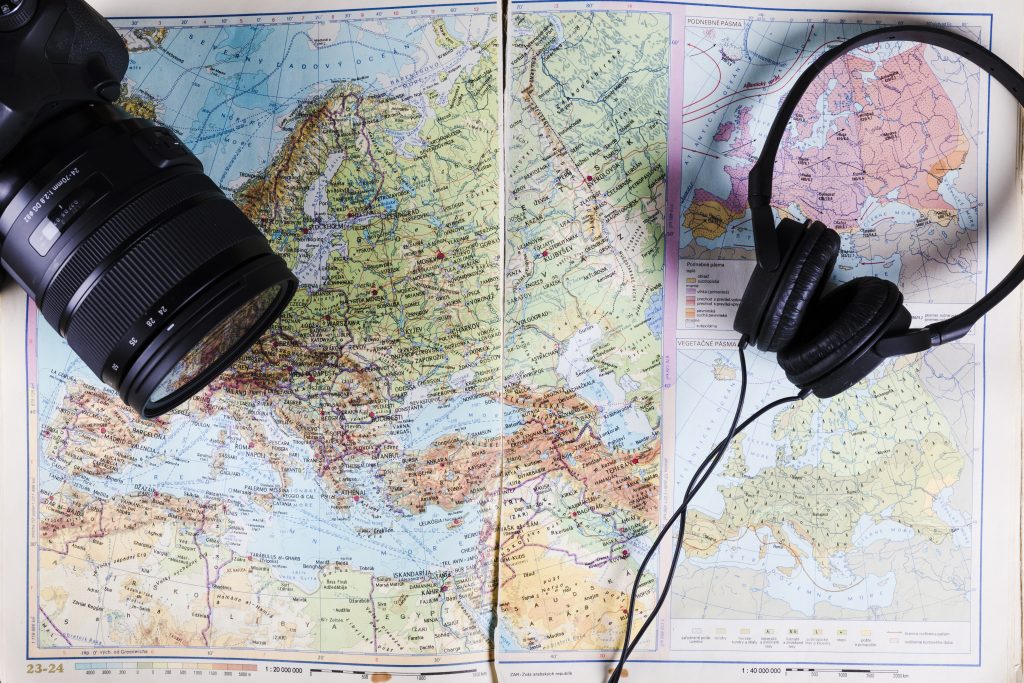

The Media Geopolitics program explores the relationships between media, power, conflicts, and public opinion. It prepares students to analyze and interpret media strategies within national and international geopolitical contexts.
The curriculum combines specialized courses, analytical workshops, media monitoring, and applied projects, enabling students to develop strong strategic and critical thinking skills.
Graduates acquire a strong geopolitical background and advanced skills in strategic media analysis. Career paths include media monitoring, expert analysis, and positions within national and international institutions.
The geopolitical media analyst studies the influence of media on international relations and public policies. They interpret media strategies of various actors and identify geopolitical trends. They prepare reports and recommendations for institutions or companies. Their role is essential in anticipating crises and understanding international public opinion.
The strategic intelligence officer collects and analyzes relevant information to support organizational decisions. They monitor news, media trends, and developments in the geopolitical environment. They provide concise reports and strategic alerts. Their role is key in planning and making informed decisions.
The influence communication consultant advises institutions or companies on their media and political strategies. They develop plans to strengthen message impact and credibility. They analyze stakeholders and public opinion to guide influence campaigns. They can work for public organizations, NGOs, or consulting firms.
The international editor produces written content for a global audience. They adapt messages to different cultural and geopolitical contexts. They write articles, analyses, and reports for media or international organizations. Their work enables effective communication on complex international issues.
The public communication advisor guides institutions in their relations with the public and media. They develop communication strategies suited to political and social issues. They prepare speeches, press releases, and institutional campaigns. Their role is crucial in strengthening transparency and public trust.
Admission to the Master’s program is subject to specific academic requirements and is granted through a competitive examination following a file review.
Applicants must hold a Bachelor’s degree in Information and Communication Sciences (or equivalent), obtained in a regular session, with no repeated years and a minimum overall average of 13/20.
Candidates must not have faced disciplinary sanctions and must not already hold a Master’s degree in the same specialization.
Registration is conducted exclusively online, with a complete application file and the selection of one specialization only
To discover the courses, learning objectives, and academic organization, download the complete training program.